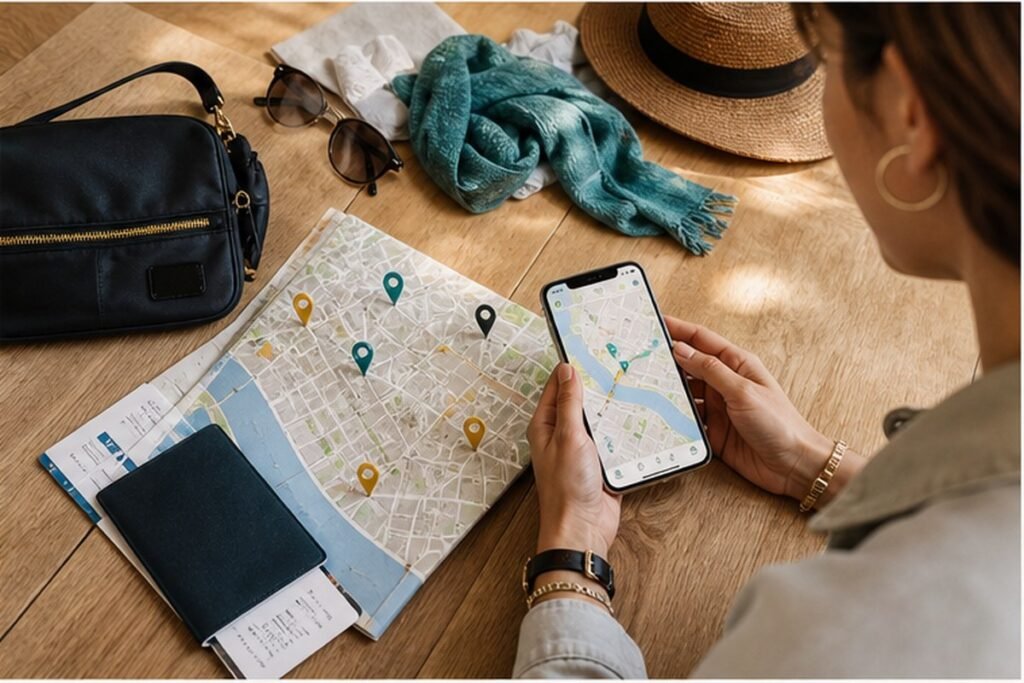
Use maps, reservations and offline information to remove logistical stress while preserving spontaneity.
A good lifestyle system makes ordinary days easier while leaving room for surprise, rest and changing priorities. Travel apps are most helpful when they hold essential information and reveal constraints. They become burdensome when every meal and minute is optimized before the traveler understands local rhythm, distance and energy. This Findreminds guide turns that idea into a sequence you can test, measure and adapt without chasing perfection.
At a glance
The simplest approach is to begin with one high-impact change, use it in a real situation, and review the result before adding more. The steps below are ordered to make travel planning apps practical for beginners while leaving enough flexibility for experienced readers.
Why travel planning apps matters
Travel apps are most helpful when they hold essential information and reveal constraints. They become burdensome when every meal and minute is optimized before the traveler understands local rhythm, distance and energy. Good systems also reduce decision fatigue: the correct next action is visible, the tools are close at hand and progress can be judged by a real outcome rather than appearance.
A practical step-by-step method
1. Create one source of truth
Keep reservation numbers, addresses, dates and essential contacts in a single itinerary that is available offline. Make the change small enough to test in one normal day. A simple before-and-after note is more useful than a perfect system that exists only on paper.
2. Map anchors before attractions
Pin the airport or station, accommodation, pharmacy, essential transit and a few priority places to understand the geography. The practical test is whether this still works when time, energy or attention is limited. If it requires repeated negotiation, reduce the number of decisions.
3. Group by neighborhood
Place activities in flexible clusters so travel time and weather changes do not collapse the whole plan. Keep the result observable. Write down what improved, what became harder and what you would change before repeating the step next week.
4. Book only real bottlenecks
Reserve timed entry, scarce transport and high-priority experiences, while leaving ordinary meals and walks adaptable. This is also a good place to remove unnecessary tools. Use the settings, materials and routines already available before buying another product or subscription.
5. Download offline support
Save maps, tickets, translations and key addresses locally, and keep a screenshot of anything that may fail without a connection. Expect the first version to be incomplete. A useful routine becomes personal through feedback, not through copying someone else’s ideal setup.
6. Share critical details
Give a trusted person appropriate itinerary and contact information, while protecting sensitive identity documents. If the step affects another person, explain the reason and agree on a simple boundary. Shared expectations are easier to maintain than silent assumptions.
7. Plan energy as well as time
Alternate demanding days with lighter windows and include realistic transit, meals and recovery. Use a clear stopping rule. Once the intended outcome is achieved, move on instead of turning a helpful adjustment into another project.
8. Use a daily decision window
Confirm tomorrow’s weather, opening information and one priority each evening instead of repeatedly rebuilding the entire trip. Review the effect after several repetitions, because one unusually easy or difficult day can give misleading feedback.
Common mistakes to avoid
- Trusting opening hours without recent verification. Pause and return to the outcome you actually want; a smaller, safer adjustment is usually easier to sustain.
- Scheduling distant attractions back to back. Pause and return to the outcome you actually want; a smaller, safer adjustment is usually easier to sustain.
- Keeping every ticket in a different app. Pause and return to the outcome you actually want; a smaller, safer adjustment is usually easier to sustain.
- Depending on one phone with no offline copy or power plan. Pause and return to the outcome you actually want; a smaller, safer adjustment is usually easier to sustain.
A realistic seven-day plan
Build the essential itinerary, add five map anchors and one flexible neighborhood cluster. Stop planning when the major constraints are covered. Keep the experiment narrow. At the end of the week, answer three questions: What became easier? What still created friction? What is the one change worth carrying forward?
Quick checklist
- Create one source of truth
- Map anchors before attractions
- Group by neighborhood
- Book only real bottlenecks
- Download offline support
- Share critical details
- Plan energy as well as time
- Write one result you will review after seven days
Frequently asked questions
Which travel app is best?
The best combination depends on destination and device. Prioritize reliable maps, official transport information, offline access and easy export.
How much of a day should be scheduled?
Many travelers enjoy one or two anchors with open time between them, but mobility, family needs and timed attractions may require more structure.
Should passport copies be stored in the cloud?
Follow official travel guidance and use secure storage with strong authentication, limiting access and avoiding unnecessary copies.
Final takeaway
Travel planning apps becomes useful when it supports a clear outcome and remains simple enough to repeat. Begin with the first relevant step, observe what happens and adapt the method to your own schedule, resources and responsibilities. Findreminds will continue to translate useful ideas across Lifestyle, work and everyday life into practical guides you can use.