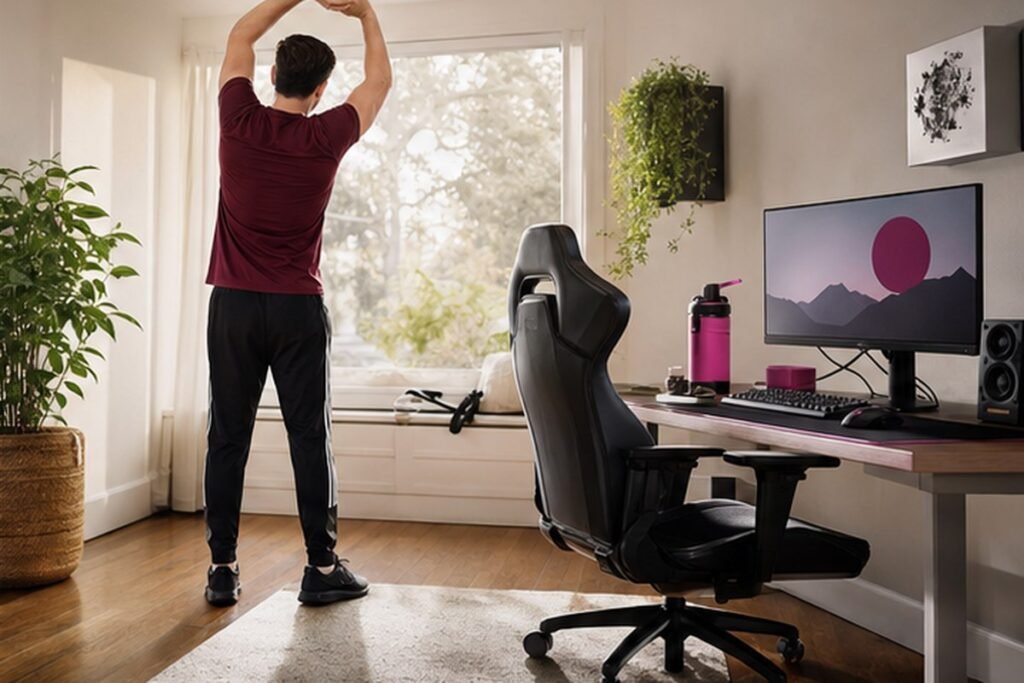
Use clearer stopping points, movement breaks and intention to keep a favorite hobby restorative.
The best gaming advice respects both the joy of play and the practical limits of time, hardware and health. Burnout can appear when play shifts from chosen enjoyment to obligation. Live-service schedules, ranked goals and social pressure make stopping harder, so healthy sessions benefit from boundaries designed before the game begins. This Findreminds guide turns that idea into a sequence you can test, measure and adapt without chasing perfection.
At a glance
The simplest approach is to begin with one high-impact change, use it in a real situation, and review the result before adding more. The steps below are ordered to make healthy gaming sessions practical for beginners while leaving enough flexibility for experienced readers.
Why healthy gaming sessions matters
Burnout can appear when play shifts from chosen enjoyment to obligation. Live-service schedules, ranked goals and social pressure make stopping harder, so healthy sessions benefit from boundaries designed before the game begins. Good systems also reduce decision fatigue: the correct next action is visible, the tools are close at hand and progress can be judged by a real outcome rather than appearance.
A practical step-by-step method
1. Name the purpose of the session
Decide whether you want story progress, social time, practice or relaxation so the session has a natural definition of enough. Make the change small enough to test in one normal day. A simple before-and-after note is more useful than a perfect system that exists only on paper.
2. Choose a stopping event
Finish after a match, quest, in-game day or checkpoint rather than relying only on a clock that may interrupt at the worst moment. The practical test is whether this still works when time, energy or attention is limited. If it requires repeated negotiation, reduce the number of decisions.
3. Protect sleep backwards
Set the last possible start time from your desired wind-down and wake time, leaving room for a session to run slightly long. Keep the result observable. Write down what improved, what became harder and what you would change before repeating the step next week.
4. Use real movement breaks
Stand, walk, change focus distance and refill water between rounds or chapters instead of switching to phone scrolling. This is also a good place to remove unnecessary tools. Use the settings, materials and routines already available before buying another product or subscription.
5. Reduce obligation loops
Turn off nonessential game notifications and let optional daily rewards expire when they conflict with life priorities. Expect the first version to be incomplete. A useful routine becomes personal through feedback, not through copying someone else’s ideal setup.
6. Separate practice from performance
Use a focused drill, review one mistake and stop before frustration makes repetition less useful. If the step affects another person, explain the reason and agree on a simple boundary. Shared expectations are easier to maintain than silent assumptions.
7. Rotate intensity
Alternate competitive or demanding games with slower experiences, other hobbies and social activities. Use a clear stopping rule. Once the intended outcome is achieved, move on instead of turning a helpful adjustment into another project.
8. Notice the after-effect
Ask whether the session left you restored, connected, tense or depleted, and use the answer to plan the next one. Review the effect after several repetitions, because one unusually easy or difficult day can give misleading feedback.
Common mistakes to avoid
- Starting a ranked match near a hard deadline. Pause and return to the outcome you actually want; a smaller, safer adjustment is usually easier to sustain.
- Using caffeine to override fatigue. Pause and return to the outcome you actually want; a smaller, safer adjustment is usually easier to sustain.
- Chasing losses without a pause. Pause and return to the outcome you actually want; a smaller, safer adjustment is usually easier to sustain.
- Keeping every daily task because of sunk-cost pressure. Pause and return to the outcome you actually want; a smaller, safer adjustment is usually easier to sustain.
A realistic seven-day plan
For one week, write a one-line intention before play and a one-line after-effect when you stop. Adjust the next session based on the pattern. Keep the experiment narrow. At the end of the week, answer three questions: What became easier? What still created friction? What is the one change worth carrying forward?
Quick checklist
- Name the purpose of the session
- Choose a stopping event
- Protect sleep backwards
- Use real movement breaks
- Reduce obligation loops
- Separate practice from performance
- Rotate intensity
- Write one result you will review after seven days
Frequently asked questions
How long should a gaming session be?
There is no single ideal length. Sleep, movement, responsibilities, symptoms and the kind of game matter more than a universal timer.
Are breaks useful during competitive play?
Yes. Brief breaks can reduce physical strain and emotional carryover, especially after a difficult match.
When is gaming no longer restorative?
Warning signs include repeated sleep loss, neglected responsibilities, persistent irritability and continuing despite clear harm; professional support can help when control feels difficult.
Final takeaway
Healthy gaming sessions becomes useful when it supports a clear outcome and remains simple enough to repeat. Begin with the first relevant step, observe what happens and adapt the method to your own schedule, resources and responsibilities. Findreminds will continue to translate useful ideas across Gaming, work and everyday life into practical guides you can use.