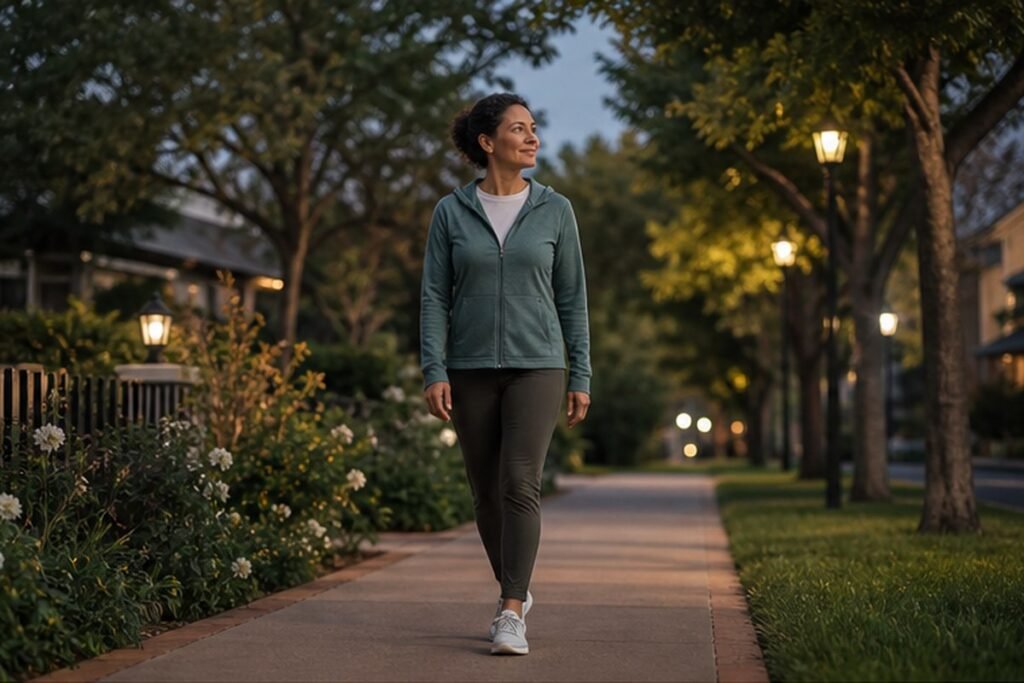
A gentle evening walk can support movement goals, mood and a smoother transition out of the workday.
Good health advice should be realistic enough to survive a normal, imperfect week. A short walk is approachable, inexpensive and easy to attach to an existing cue: finishing dinner. It does not need to be fast or athletic to count as movement, and it can become a useful social or reflective ritual. This Findreminds guide turns that idea into a sequence you can test, measure and adapt without chasing perfection.
At a glance
The simplest approach is to begin with one high-impact change, use it in a real situation, and review the result before adding more. The steps below are ordered to make walking after dinner practical for beginners while leaving enough flexibility for experienced readers.
Why walking after dinner matters
A short walk is approachable, inexpensive and easy to attach to an existing cue: finishing dinner. It does not need to be fast or athletic to count as movement, and it can become a useful social or reflective ritual. Good systems also reduce decision fatigue: the correct next action is visible, the tools are close at hand and progress can be judged by a real outcome rather than appearance.
A practical step-by-step method
1. Define an easy starting dose
Begin with ten to twenty comfortable minutes and finish feeling that you could have continued, especially if you are returning after inactivity. Make the change small enough to test in one normal day. A simple before-and-after note is more useful than a perfect system that exists only on paper.
2. Use dinner as the cue
Place shoes near the door and start after clearing the table so the habit depends less on motivation or remembering. The practical test is whether this still works when time, energy or attention is limited. If it requires repeated negotiation, reduce the number of decisions.
3. Choose a safe route
Prefer good lighting, predictable surfaces and low traffic, and carry visibility equipment or walk indoors when conditions are poor. Keep the result observable. Write down what improved, what became harder and what you would change before repeating the step next week.
4. Keep the pace conversational
Walk at an effort that allows normal sentences unless a clinician or training plan has given you a different target. This is also a good place to remove unnecessary tools. Use the settings, materials and routines already available before buying another product or subscription.
5. Make it socially useful
Invite a family member, call a friend with hands-free audio where safe, or use the walk as quiet time together. Expect the first version to be incomplete. A useful routine becomes personal through feedback, not through copying someone else’s ideal setup.
6. Track consistency, not calories
Mark completed walks on a calendar and let duration grow naturally instead of treating the habit as punishment for eating. If the step affects another person, explain the reason and agree on a simple boundary. Shared expectations are easier to maintain than silent assumptions.
7. Prepare an indoor version
Use a hallway, stairs within your ability, a mall or a short mobility circuit so weather does not erase the cue. Use a clear stopping rule. Once the intended outcome is achieved, move on instead of turning a helpful adjustment into another project.
8. Notice recovery and sleep
Record energy, discomfort and bedtime response, and adjust timing or intensity when the walk feels activating rather than settling. Review the effect after several repetitions, because one unusually easy or difficult day can give misleading feedback.
Common mistakes to avoid
- Starting too fast after a heavy meal. Pause and return to the outcome you actually want; a smaller, safer adjustment is usually easier to sustain.
- Wearing unsupportive footwear on long or uneven routes. Pause and return to the outcome you actually want; a smaller, safer adjustment is usually easier to sustain.
- Walking in unsafe heat or poor air quality. Pause and return to the outcome you actually want; a smaller, safer adjustment is usually easier to sustain.
- Assuming a short walk replaces all recommended activity. Pause and return to the outcome you actually want; a smaller, safer adjustment is usually easier to sustain.
A realistic seven-day plan
Walk ten minutes after dinner on four days this week. Add five minutes next week only if joints, energy and schedule respond well. Keep the experiment narrow. At the end of the week, answer three questions: What became easier? What still created friction? What is the one change worth carrying forward?
Quick checklist
- Define an easy starting dose
- Use dinner as the cue
- Choose a safe route
- Keep the pace conversational
- Make it socially useful
- Track consistency, not calories
- Prepare an indoor version
- Write one result you will review after seven days
Frequently asked questions
Does a 20-minute walk count as exercise?
Yes. The CDC notes that some activity is better than none and weekly activity can be divided into smaller chunks.
How soon after dinner should I walk?
A gentle walk can begin when comfortable. People with reflux, pain or other conditions should follow individual medical guidance.
What if I cannot walk comfortably?
Chair-based movement, wheeling, water exercise or clinician-guided rehabilitation may provide safer alternatives.
Final takeaway
Walking after dinner becomes useful when it supports a clear outcome and remains simple enough to repeat. Begin with the first relevant step, observe what happens and adapt the method to your own schedule, resources and responsibilities. Findreminds will continue to translate useful ideas across Health, work and everyday life into practical guides you can use.