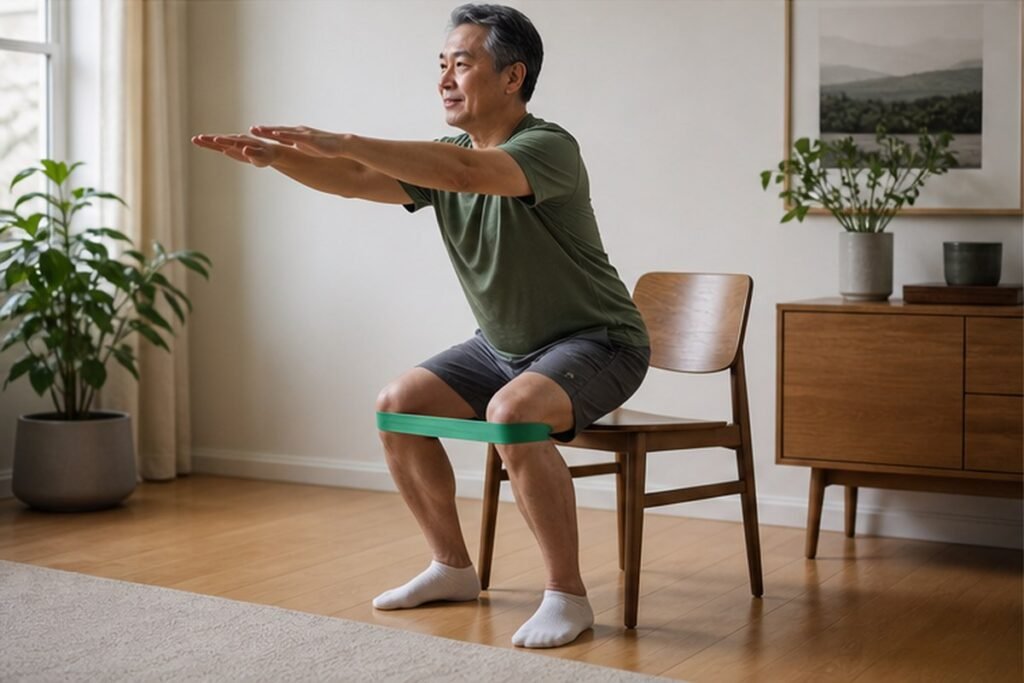
Build a balanced full-body session with simple movement patterns, sensible effort and room to progress.
Good health advice should be realistic enough to survive a normal, imperfect week. Strength work supports daily tasks, balance and long-term physical function. Beginners benefit most from learning repeatable movements and recovering well, not from chasing exhaustion or copying an advanced routine. This Findreminds guide turns that idea into a sequence you can test, measure and adapt without chasing perfection.
At a glance
The simplest approach is to begin with one high-impact change, use it in a real situation, and review the result before adding more. The steps below are ordered to make beginner strength routine practical for beginners while leaving enough flexibility for experienced readers.
Why beginner strength routine matters
Strength work supports daily tasks, balance and long-term physical function. Beginners benefit most from learning repeatable movements and recovering well, not from chasing exhaustion or copying an advanced routine. Good systems also reduce decision fatigue: the correct next action is visible, the tools are close at hand and progress can be judged by a real outcome rather than appearance.
A practical step-by-step method
1. Start with a readiness check
Choose pain-free ranges, review relevant medical restrictions and keep a stable chair or wall nearby when balance is uncertain. Make the change small enough to test in one normal day. A simple before-and-after note is more useful than a perfect system that exists only on paper.
2. Warm up for four minutes
Use easy marching, shoulder circles, hip hinges and controlled sit-to-stands to rehearse the patterns in the session. The practical test is whether this still works when time, energy or attention is limited. If it requires repeated negotiation, reduce the number of decisions.
3. Practice a squat pattern
Use a chair sit-to-stand, keeping feet stable and controlling both directions; adjust chair height to match current ability. Keep the result observable. Write down what improved, what became harder and what you would change before repeating the step next week.
4. Add a push
Try a wall or countertop push-up, maintaining a straight body line and moving through a comfortable shoulder range. This is also a good place to remove unnecessary tools. Use the settings, materials and routines already available before buying another product or subscription.
5. Add a pull
Use a securely anchored resistance band and draw elbows back without shrugging, pausing briefly near the body. Expect the first version to be incomplete. A useful routine becomes personal through feedback, not through copying someone else’s ideal setup.
6. Train the hips
Practice a hip hinge or glute bridge, focusing on controlled hip movement instead of pulling through the lower back. If the step affects another person, explain the reason and agree on a simple boundary. Shared expectations are easier to maintain than silent assumptions.
7. Carry or brace
Hold a manageable object at one side while standing tall, or use a gentle dead-bug variation for trunk control. Use a clear stopping rule. Once the intended outcome is achieved, move on instead of turning a helpful adjustment into another project.
8. Progress one variable
Add a repetition, a small amount of resistance or a more challenging variation only after technique remains steady. Review the effect after several repetitions, because one unusually easy or difficult day can give misleading feedback.
Common mistakes to avoid
- Holding the breath through every repetition. Pause and return to the outcome you actually want; a smaller, safer adjustment is usually easier to sustain.
- Training through sharp or increasing pain. Pause and return to the outcome you actually want; a smaller, safer adjustment is usually easier to sustain.
- Adding weight before controlling the movement. Pause and return to the outcome you actually want; a smaller, safer adjustment is usually easier to sustain.
- Copying a high-volume social media workout. Pause and return to the outcome you actually want; a smaller, safer adjustment is usually easier to sustain.
A realistic seven-day plan
Perform one or two sets of each movement twice this week with at least a day between sessions. Stop each set with several good repetitions still possible. Keep the experiment narrow. At the end of the week, answer three questions: What became easier? What still created friction? What is the one change worth carrying forward?
Quick checklist
- Start with a readiness check
- Warm up for four minutes
- Practice a squat pattern
- Add a push
- Add a pull
- Train the hips
- Carry or brace
- Write one result you will review after seven days
Frequently asked questions
How often should adults do strength work?
CDC guidelines recommend muscle-strengthening activity on at least two days each week, alongside aerobic activity.
Do beginners need a gym?
No. Body weight, household objects and resistance bands can cover the main movement patterns when used safely.
When should I increase resistance?
Increase gradually when the current version feels controlled across all planned repetitions and recovery is comfortable.
Final takeaway
Beginner strength routine becomes useful when it supports a clear outcome and remains simple enough to repeat. Begin with the first relevant step, observe what happens and adapt the method to your own schedule, resources and responsibilities. Findreminds will continue to translate useful ideas across Health, work and everyday life into practical guides you can use.