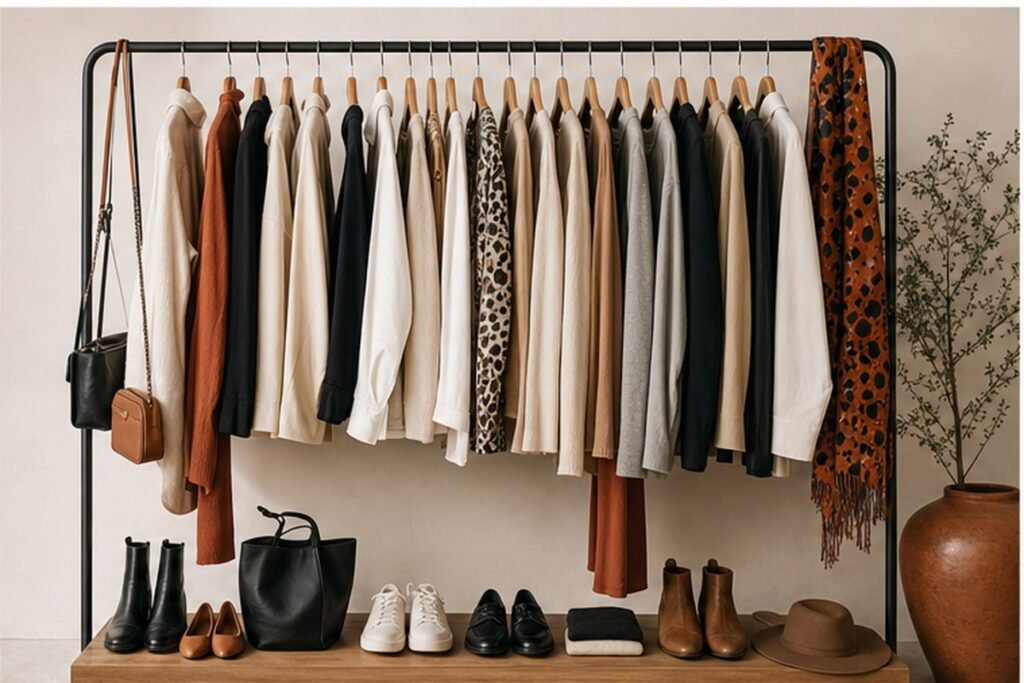
Use a small seasonal core as a styling tool while keeping color, texture and distinctive pieces.
Useful fashion advice starts with the clothes, climate, body and life you already have. A capsule wardrobe is not a uniform or a competition to own less. It is a selected group of pieces that handles most frequent situations with fewer difficult decisions. This Findreminds guide turns that idea into a sequence you can test, measure and adapt without chasing perfection.
At a glance
The simplest approach is to begin with one high-impact change, use it in a real situation, and review the result before adding more. The steps below are ordered to make capsule wardrobe practical for beginners while leaving enough flexibility for experienced readers.
Why capsule wardrobe matters
A capsule wardrobe is not a uniform or a competition to own less. It is a selected group of pieces that handles most frequent situations with fewer difficult decisions. Good systems also reduce decision fatigue: the correct next action is visible, the tools are close at hand and progress can be judged by a real outcome rather than appearance.
A practical step-by-step method
1. Audit the calendar
List the settings that occupy most weeks—work, caregiving, worship, social events, exercise and climate-specific needs. Make the change small enough to test in one normal day. A simple before-and-after note is more useful than a perfect system that exists only on paper.
2. Choose a seasonal window
Build for the next two or three months rather than trying to solve every temperature and occasion at once. The practical test is whether this still works when time, energy or attention is limited. If it requires repeated negotiation, reduce the number of decisions.
3. Select dependable foundations
Begin with bottoms, dresses or base layers you already wear comfortably and can care for realistically. Keep the result observable. Write down what improved, what became harder and what you would change before repeating the step next week.
4. Create a flexible color story
Use several coordinating neutrals plus one or two accent families, without excluding prints or colors you love. This is also a good place to remove unnecessary tools. Use the settings, materials and routines already available before buying another product or subscription.
5. Balance tops and layers
Favor pieces that change mood through layering, rolling, tucking or accessories rather than near-duplicates. Expect the first version to be incomplete. A useful routine becomes personal through feedback, not through copying someone else’s ideal setup.
6. Keep personality pieces
Include texture, jewelry, a bold jacket or a memorable print that makes simple combinations feel intentional. If the step affects another person, explain the reason and agree on a simple boundary. Shared expectations are easier to maintain than silent assumptions.
7. Run an outfit test
Each item should support multiple real outfits, but special-purpose pieces can stay outside the capsule. Use a clear stopping rule. Once the intended outcome is achieved, move on instead of turning a helpful adjustment into another project.
8. Photograph the results
Save ten reliable combinations and note any genuine gap before considering a purchase. Review the effect after several repetitions, because one unusually easy or difficult day can give misleading feedback.
Common mistakes to avoid
- Buying an entirely new neutral wardrobe. Pause and return to the outcome you actually want; a smaller, safer adjustment is usually easier to sustain.
- Choosing an arbitrary number over lifestyle needs. Pause and return to the outcome you actually want; a smaller, safer adjustment is usually easier to sustain.
- Excluding necessary occasion wear from the wider closet. Pause and return to the outcome you actually want; a smaller, safer adjustment is usually easier to sustain.
- Keeping uncomfortable basics because they look versatile. Pause and return to the outcome you actually want; a smaller, safer adjustment is usually easier to sustain.
A realistic seven-day plan
Pull thirty likely pieces, build and photograph ten outfits, then remove the five items that contribute least to comfort or combination. Keep the experiment narrow. At the end of the week, answer three questions: What became easier? What still created friction? What is the one change worth carrying forward?
Quick checklist
- Audit the calendar
- Choose a seasonal window
- Select dependable foundations
- Create a flexible color story
- Balance tops and layers
- Keep personality pieces
- Run an outfit test
- Write one result you will review after seven days
Frequently asked questions
Must a capsule contain exactly 25 pieces?
No. Twenty-five is a useful experiment, not a rule. The right size depends on climate, laundry and daily roles.
Do shoes and accessories count?
Count them if doing so helps decisions. Many people track clothing separately and keep a small accessory collection.
Can a capsule wardrobe be colorful?
Absolutely. Coordination matters more than neutrality, and a repeated color family can make bright pieces easy to combine.
Final takeaway
Capsule wardrobe becomes useful when it supports a clear outcome and remains simple enough to repeat. Begin with the first relevant step, observe what happens and adapt the method to your own schedule, resources and responsibilities. Findreminds will continue to translate useful ideas across Fashion, work and everyday life into practical guides you can use.